
Emergency Air Duct Cleaning Near Me: What Kingsbridge Homeowners Should Do First
A dead mouse in your return duct and a flooded air handler are both emergencies, but they need completely different responses. Calling a duct cleaner first for either one can make the problem worse and cost you more. In Kingsbridge, we see this constantly: a homeowner panics, books the first “emergency air duct cleaning near me” result, and pays for a cleaning when what they actually needed was a diagnosis and a different trade entirely. So before you dial anyone, take five minutes to figure out what kind of emergency you’re actually dealing with.
If you’d rather have someone walk through it with you, call (855) 658-4077. We answer 24/7. Fast dispatch from 7am to 7pm, Sunday through Friday.
What Kind of Emergency Do You Actually Have?
Not every duct problem is a duct problem. Most calls we get in Kingsbridge fall into one of three buckets, and each one needs a different first call. Getting this wrong is the single most common mistake we see.
Biological emergency. Visible mold growth inside a register, a strong musty smell that gets worse when the system runs, or obvious vermin activity (droppings, nesting material, scratching in the walls). This is a contamination problem. It needs containment and professional extraction, not a quick vacuum. If you see mold, don’t run the system and don’t try to wipe it out of a vent yourself.
Mechanical emergency. A duct section has collapsed or separated, airflow has dropped sharply in part of the house, the blower has failed, or you hear metal banging or rattling when the system cycles. This is an HVAC and duct-structure problem. A cleaning crew alone won’t fix a collapsed return; you need someone who can inspect the interior of the duct and either repair and seal it or refer you to an HVAC technician.
Contamination-based emergency. Smoke residue from a kitchen fire, construction dust after a renovation, or water intrusion that has soaked into duct insulation. These require a broader response: negative air pressure, HEPA filtration, and a plan for the whole affected zone, not just the closest register.
Take a photo. Note what you smell, what you hear, and where in the house it’s strongest. That five minutes of triage is worth more than any coupon.
Why You Should Shut the System Down Before Anyone Arrives
The single most useful thing a Kingsbridge homeowner can do while waiting for a technician is turn the HVAC system off. Not “set it lower.” Off. If a duct has pulled apart, if there’s mold in a return, or if vermin have been active in the system, every minute the fan runs, it’s pushing contaminants into every room it serves.
Here’s what to do instead of running the system:
- Switch the thermostat to OFF, not just to a lower temperature. Fan-only mode spreads air too.
- Close the supply and return registers in the affected rooms by hand. Many older Kingsbridge registers have a manual damper lever behind the grille. Close what you can reach.
- Open windows in the rooms away from the affected duct run. You’re not trying to ventilate the contaminated zone; you’re trying to keep the rest of the house from pulling contaminated air toward it.
- Don’t run a box fan or a shop vac in the affected area. Both of them aerosolize dust and spores instead of trapping them.
- If the system has a filter slot, check the filter. If it’s visibly saturated, note it for the technician, but don’t change it if the filter is downstream of an active contamination point without asking a pro first.
We can’t count how many times we’ve arrived to find the system still running because the homeowner assumed “emergency air duct cleaning” meant the crew would handle everything. The system being off makes the whole job faster and cleaner when we get there.
What Equipment Should an Emergency Duct Response Actually Show Up With?
This is where the “near me” results split. A legitimate emergency response crew in Kingsbridge arrives with professional equipment for contamination control, not a shop vacuum and a brush. Here’s what to look for on the vehicle or the work order before you let anyone into your home:
- Negative air machines and containment. These keep the affected zone under lower pressure so dust and spores go into the machine, not into your living room. This is the equipment category that Abatement Technologies makes, and it’s what separates a real remediation response from a cleaning.
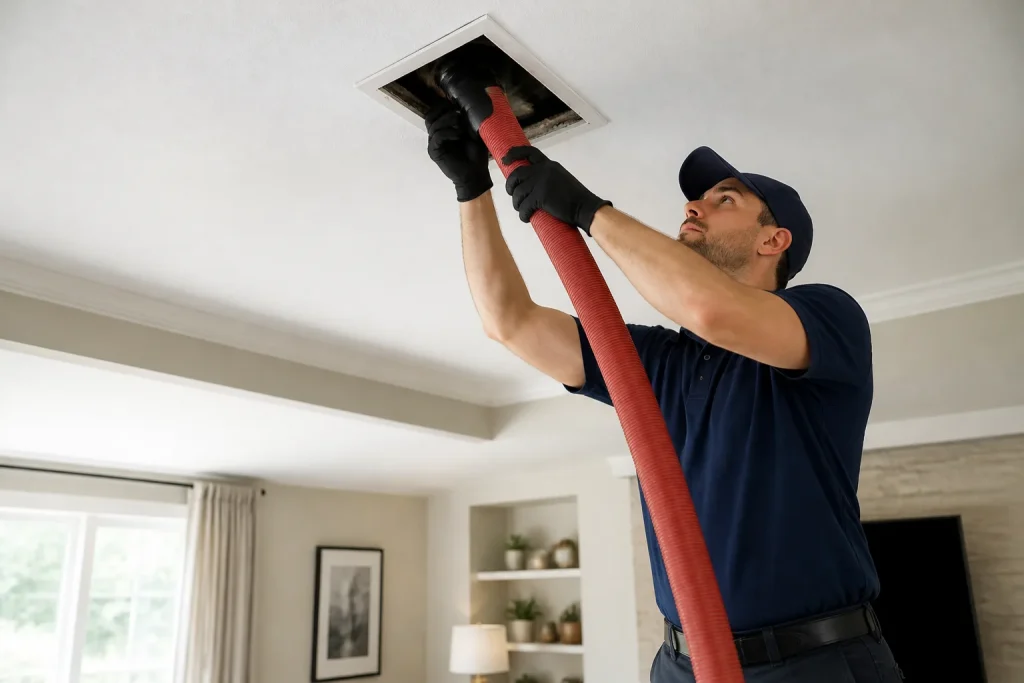
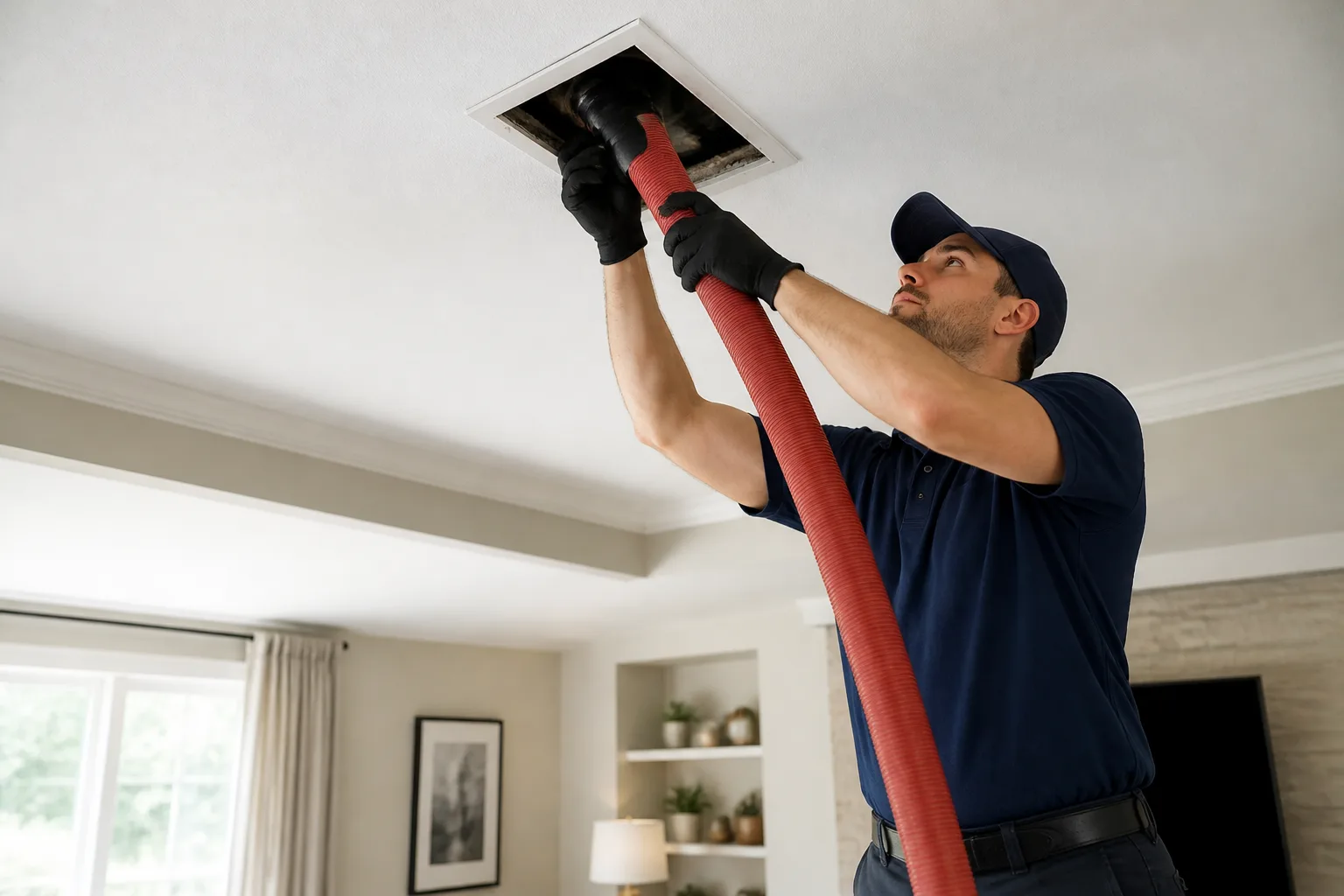
- Professional extraction units. Rotobrush and Nikro systems are the industry-standard tools for interior duct cleaning. They agitate and extract debris along the full length of the duct, not just the first few inches behind the register.
- HEPA filtration and pre-filters. Ask what the crew is exhausting and where it’s exhausting to. If the answer is “outside through a window,” good. If the answer is “we don’t use a machine like that,” that’s your sign.
- An inspection camera. A professional-grade scope goes inside the duct and shows you what’s actually there. The crew we connect you with uses an inspection-first process: we show you what we find before any work starts.
- Sanitizing products with a clear label. Professional-grade treatment products, such as Guardsman-brand formulas, come with specific dilution and application instructions. Consumer sprays and foggers don’t.
If a crew shows up with a wet/dry vac and a handheld brush, they’re not set up for an emergency response. That’s a cleaning service, and there’s nothing wrong with that for a routine job, but it’s not what a biological or contamination emergency needs.
The Kingsbridge Building Stock Problem: Wet Ducts in Pre-War Buildings
This is the part that gets missed in every generic article about duct emergencies. Large parts of Kingsbridge are pre-war apartment buildings and older houses, and many of them still run galvanized steel ductwork. Galvanized steel has a zinc coating that protects it from corrosion, and that coating fails faster when the metal stays wet. In a building where a pipe has burst, an air handler has overflowed, or a roof has leaked into a duct run, the ductwork isn’t just wet, it’s starting to corrode from the inside.
That matters for two reasons. First, corrosion roughens the duct interior and gives mold, dust, and debris a much better surface to cling to. Second, corroded duct seams and joints stop sealing properly, so you lose airflow and end up paying to heat or cool air that never reaches the room.
So if your “emergency” involves water, a post-flood duct inspection isn’t optional. It needs to happen before anyone sanitizes anything, because sanitizing a wet, corroding duct just locks the moisture in. Ask the crew specifically whether they’ll inspect the duct interior after a water event, and whether they can repair or reseal any compromised sections. That’s where our air duct cleaning Kingsbridge service starts: inspection, then a written plan, then the work.
Document Before the Crew Arrives: Protecting Your Insurance Claim
If this emergency is going to go through a homeowner’s or building insurance claim, the photos you take in the next hour matter more than anything the crew does on-site. Most insurers want to see the condition of the space before any cleaning or repair, not after.
Document these before anyone touches the ducts:
- Wide shots of every affected room, from the doorway, before anything is moved.
- Close-ups of every visible register, grille, and return, including the condition of the grille itself.
- The water line if there’s water damage, with a tape measure or a coin visible for scale.
- Any visible mold, staining, or debris, photographed with a light source so the texture is clear.
- The thermostat reading and the date/time stamp on the photos.
- Any HVAC service records that show the system was working before the event.
Keep the originals. Don’t crop them, don’t use filters, and don’t delete anything that looks like a duplicate. The crew can add their own documentation once they arrive, and a written scope of work from a licensed and insured local professional will support the claim better than a verbal estimate. We can work with your insurer on the documentation side, but the photos you take now are the part only you can capture.
When to Call a Pro (and When Not To)
Call a pro the same day if you smell persistent musty odor from a register, see visible growth inside a duct, hear scratching or thumping inside a wall that connects to a duct chase, notice a sharp airflow drop in part of the house, or have had any water contact the ductwork. All of those are signs that the system needs a real inspection.
You can probably wait for a scheduled visit if the complaint is dust buildup on registers, a mild stuffy smell in a room without any visible growth, or a seasonal allergy flare-up that gets better when you leave the house. Routine air duct cleaning handles those well; it just doesn’t need to be a same-day call.
One more thing we’ve learned from doing this work in Kingsbridge: if your dryer is taking two cycles to dry a load or the laundry room feels humid, that’s a separate problem with its own risk. Dryer vent cleaning is a different service with a different scope, and it’s worth its own call rather than tacking onto a duct visit. Same goes for the mechanical side of the system: a failing blower or a noisy air handler is an HVAC issue, and HVAC cleaning plus a proper inspection is the right starting point. And if the ducts turn out to be structurally compromised, we can repair and reseal them rather than cleaning around the problem.
One call covers the whole system: cleaning, inspection, repair, and sealing. But the first step is always the same, figure out which of the three emergency types you’re actually dealing with, and call the right trade for it.
The Bottom Line
Most “emergency air duct cleaning” calls in Kingsbridge don’t need a cleaning that day. They need a diagnosis that day from someone who can tell the difference between a biological, mechanical, or contamination emergency, shut the system down, protect the rest of the house, and document the damage for insurance. Once that diagnosis is done, cleaning, repair, and sealing can follow in the right order.
Here’s the short version to keep on your phone:
- Turn the system OFF, not just down. Close registers by hand.
- Photograph everything before anyone touches it.
- Match the emergency type to the first call: mold and vermin need containment; duct collapse and blower failure need mechanical inspection; smoke and construction dust need negative air and filtration.
- Ask what equipment is coming. Negative air, containment, and a Rotobrush or Nikro extraction unit are the signs of a real response.
- In pre-war Kingsbridge buildings, always inspect for corrosion after any water event.
If you’re in Kingsbridge and need help, Air Duct Cleaning Kingsbridge offers free estimates. Call (855) 658-4077. We answer 24/7. Fast dispatch from 7am to 7pm, Sunday through Friday. Our technicians have up to 9 years of experience, and every job is priced with one flat price per system agreed before work starts, with before-and-after photos of your own ducts so you can see exactly what was done.
Frequently Asked Questions
Air duct cleaning in Kingsbridge is priced per whole system, not per vent, and the written estimate you get before any work starts is the final price. A typical cleaning is quoted in a range based on the number of returns, the length of the duct runs, and whether the system needs sanitizing or repair. We don’t quote a per-vent figure because that’s the number that turns into a bait-and-switch invoice. Call (855) 658-4077 for an exact quote, estimates are free.
Cheaper quotes usually mean skipping the equipment that makes a job safe: no negative air machine, no containment, no inspection camera, and a shop vac instead of a Rotobrush or Nikro unit. That’s fine for a light surface cleaning, but it’s the wrong tool for a biological or contamination emergency. What looks like a low price at the door usually becomes a larger invoice once the crew is inside. One flat price per system, agreed in writing before work starts, is the honest structure. Call (855) 658-4077 for a free estimate.
Ask for before-and-after photos of your own ducts, not stock images. A legitimate crew takes an inspection camera photo of the dirty duct, cleans and extracts, then photographs the same spot again. If the crew can’t show you the duct interior before and after, the work is unverified. Call (855) 658-4077 and we’ll walk you through what the documentation should look like.
For most Kingsbridge homes, routine cleaning every few years is reasonable, more often if you have pets, allergies, recent renovations, or an older pre-war building with galvanized ductwork. The honest answer is that a duct system is cleaned when an inspection shows it needs it, not on a fixed calendar. That’s why we start with an inspection and show you what we find. Call (855) 658-4077 for a free estimate.
Written by the team at Air Duct Cleaning Kingsbridge.
Need Air Duct Cleaning Help?
Call Air Duct Cleaning Kingsbridge - the local pro we connect you with is licensed and insured, with free written estimates in Kingsbridge.
(855) 658-4077