
Top Signs You Need Air Duct Cleaning Service – Don’t Ignore These
The most common mistake we see is homeowners reading the dust on their supply registers as proof their ducts are dirty. It’s actually the opposite in most cases: dust sitting on the register face usually means the filter is already letting fine particulate through, which tells you the interior of the duct run is likely worse than that register suggests. In our experience, the signs that actually matter are behavioral and mechanical, not cosmetic. If you’d rather not climb around your own system diagnosing airflow, call (855) 658-4077.
1. Debris Blowing Out of Vents at Startup (Not Just Register Dust)
These are two very different problems with two very different urgency levels. When you turn the system on and see a puff of dust settle on furniture or a coffee table, that is active contamination inside the plenum or main trunk line being pushed through by the blower. When dust only sits on the register face and nothing blows out, it’s more likely a filter quality issue or a slight negative pressure problem pulling dust toward the return.
Here’s why the distinction matters. Surface register dust is a maintenance item. Debris blowing from a vent at startup means the accumulation is already inside the moving air path, and every heating or cooling cycle is redistributing it through rooms you actually breathe in. In Kingsbridge homes where the systems have run several seasons without attention, this is the first signal we look for during an inspection.
- Register face dust only: check filter fit, filter MERV rating, and whether return grilles are pulling from a dusty area.
- Visible blowback at startup: contamination is inside the plenum or trunk line, needs mechanical extraction, not a filter swap.
- Persistent puff after filter change: the debris is past the filter and already in the duct interior.
- Debris visible in the return drop: contamination is ahead of the filter, so the filter isn’t doing the job it was installed for.
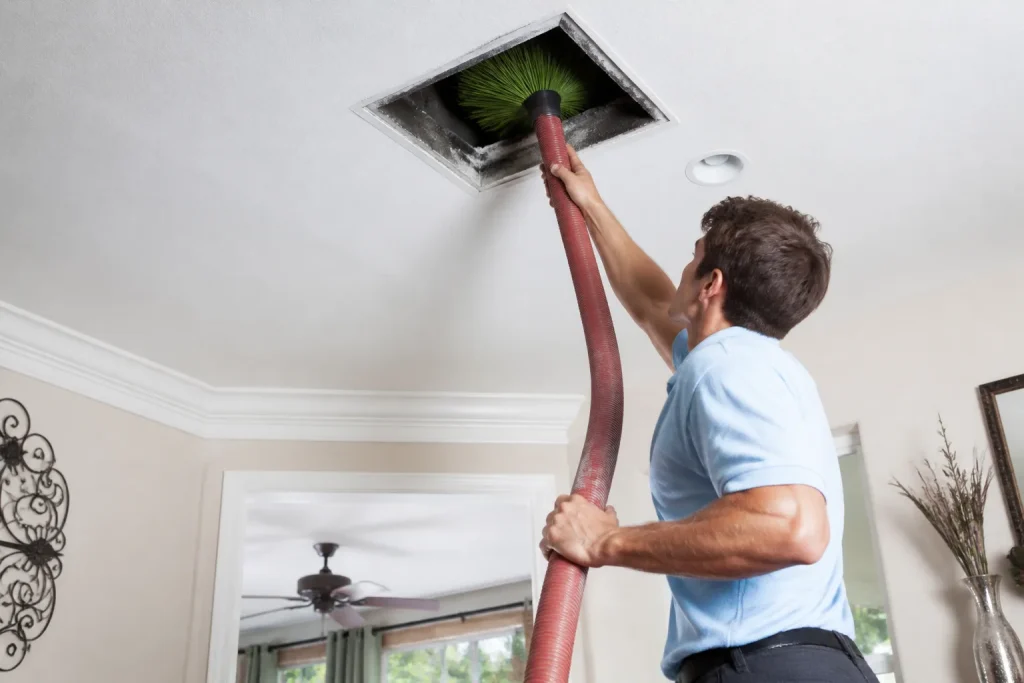
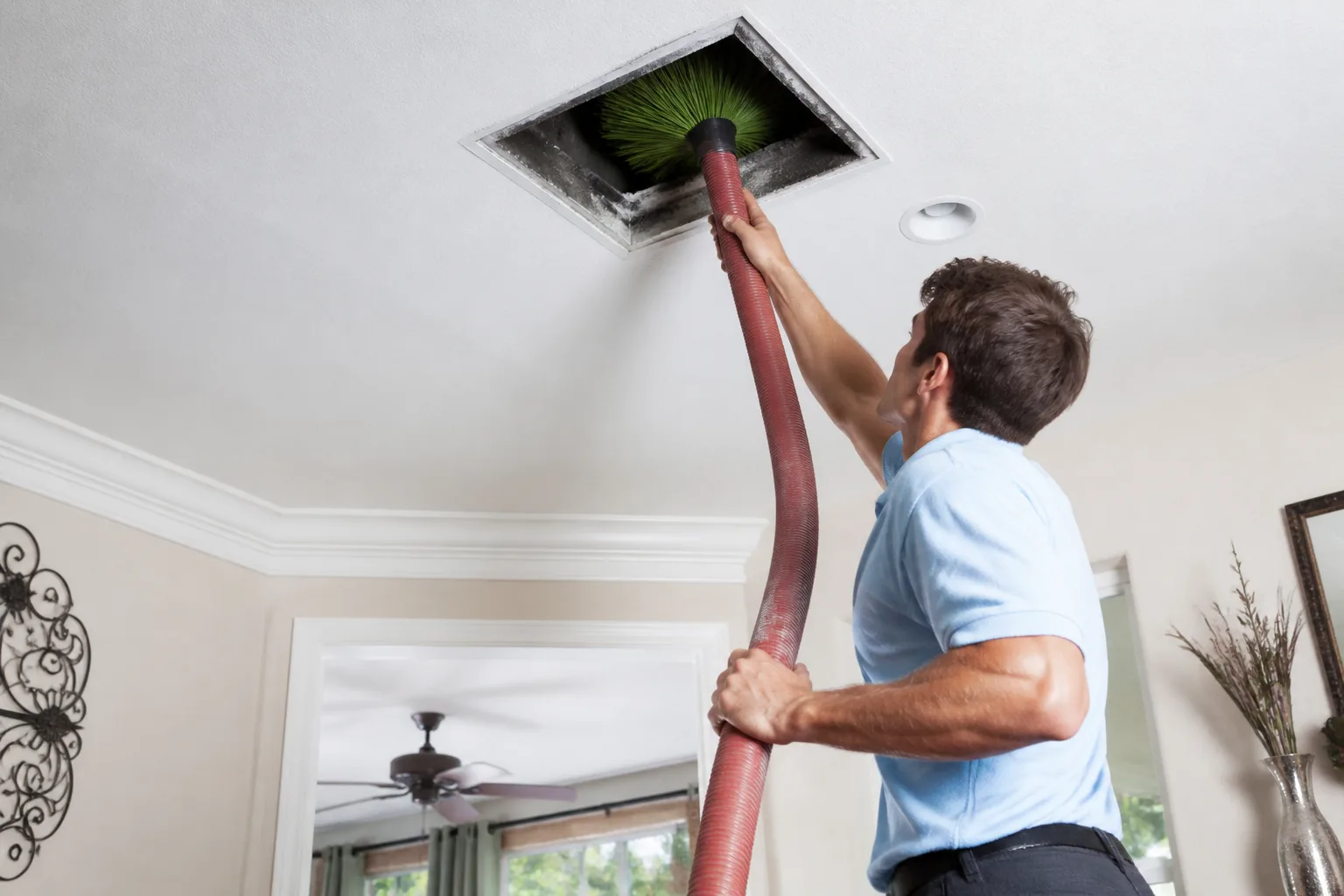
What we use for this is a Rotobrush or Nikro system with a negative-pressure vacuum holding the run while a rotary brush works the interior. Off-the-shelf or rented equipment doesn’t create enough differential pressure to pull the fine fraction out of a trunk line, which is often why a DIY attempt leaves the ducts looking unchanged.
2. Uneven Room Temperatures as a Duct-Condition Indicator
If the room above the garage runs five degrees warmer than the living room in summer, most people assume the AC is undersized or the thermostat is off. In a lot of cases the real cause is partial blockage inside the branch run serving that room. Accumulated debris reduces the cross-sectional area of the duct, which drops static pressure at that branch and starves the room of airflow while the blower pushes harder everywhere else. The airflow didn’t fail; it was throttled.
This is where proper air duct cleaning often restores balance without an HVAC service call, because the diagnosis is duct condition, not equipment capacity. What we look for:
- One or two rooms consistently off: usually a branch run with debris accumulation or a collapsed flex section.
- Weak airflow at a specific register with good airflow elsewhere: points to a blockage in that branch, not the blower.
- Whistling or whooshing at a vent: the duct is undersized for the pressure being pushed through it, often because debris has narrowed the effective size.
- Every room weak: this is a filter, blower, or main trunk problem, and should be looked at before any duct work is discussed.
For Kingsbridge homes with additions, finished basements, or converted attics, the branch runs are often longer and more convoluted than the original system was designed for. That makes them the first to show symptoms as debris builds.
3. Post-Renovation Debris: Why the Clock Is Shorter Than You Think
Kingsbridge has an active gut-rehab and renovation market, and the dust that follows a kitchen or bathroom remodel is not the dust a standard furnace filter is built to catch. Drywall dust, joint compound particulate, and sawdust from trim work are fine enough to pass through most standard filters and fine enough to coat the inside of a duct like a film. Once that film settles, it starts to cure against the duct wall, and the window to extract it cleanly is measured in weeks, not months.
What we do on post-renovation work in Kingsbridge:
- Seal the working zone: Abatement Technologies air filtration and containment equipment is used to keep dust from migrating into the rest of the house during the cleaning itself.
- Extract with negative pressure: Rotobrush and Nikro equipment pulls the fine fraction out rather than just agitating it.
- Check the plenum and blower: drywall dust gets pulled through the return and often ends up on the blower wheel, which cuts airflow system-wide.
- Sanitize with a professional-grade product: Guardsman-brand treatments are used where the interior shows organic debris or odor, not as a default upsell.
The practical advice: if you’re mid-renovation and cutting drywall, schedule the duct work for after the dust settles but before the heat or cooling season really starts, when the particles are still loose and easier to extract.
4. Musty Odors vs. Burnt Odors: Two Different Problems
Musty smell coming from vents is almost always a moisture situation. Mold needs both a moisture supply and an organic food source, and a duct system with accumulated dust, pet hair, or skin cells provides the food while condensation cycles from the AC coil provide the moisture. Both conditions are met, and the growth starts on the interior of the plenum and coil housing before it ever reaches the vents.
Burnt odor at the registers, by contrast, is usually debris that has landed on the heat exchanger and is cooking off during the heating cycle. That is not a duct cleaning problem, and we don’t treat it like one: a technician should inspect the heat exchanger for a safety check before any cleaning happens. Confusing these two is common, and it costs homeowners money because they chase the wrong fix.
For the musty case, our process pairs mechanical cleaning with a professional-grade sanitizing step using Guardsman-brand products, and where the home already has or wants filtration added, we work with Honeywell and Aprilaire components that are built to manage the humidity side of the equation so the problem doesn’t return.
5. The Pest Sign Most Homeowners Miss
Fine debris or small droppings collecting at floor registers, paired with scratching or light skittering sounds in the duct run, is a vermin contamination situation. Mice and other small animals move through duct systems easily, especially in older Kingsbridge homes where return drops and crawlspace connections have gaps. A mechanical cleaning alone doesn’t resolve this: the interior surfaces need sanitizing with a professional-grade product like Sporicidin or equivalent after the debris is removed, and the entry points need to be sealed so it doesn’t happen again.
What to check in your own home before calling:
- Fine dark debris accumulating at one specific floor register more than others.
- Scratching, skittering, or light thumping inside the wall cavity or duct run after the system shuts off.
- Nesting material or shredded paper visible near a return grille.
- Any odor following the pest activity that persists after standard cleaning.
This is a case where “just clean it” is not enough, and one call covers the whole job: extraction, sanitizing, and repairing the duct penetrations that let the pest in to begin with.
When to Call a Pro (and What to Skip)
If the symptom you’re seeing is only register dust and a dirty filter, start with a filter change and a visual inspection. If you’re seeing blowback at startup, persistent uneven room airflow, a musty smell that follows the AC, or pest evidence at a register, that’s when mechanical extraction with proper equipment pays for itself. Our technicians have up to 9 years of experience in exactly this diagnostic step, and we always inspect first and show you what we find before recommending work. Professional-grade equipment, not off-the-shelf tools, is the difference between a clean duct and a wiped duct.
Related services in Kingsbridge: Air Duct Cleaning Kingsbridge for the full inspection and extraction process, HVAC cleaning when blower and coil residue is part of the problem, and dryer vent cleaning if your dryer is taking more than one cycle to finish a load.
The Bottom Line
The signs that actually matter are behavioral: debris blowing out of vents at startup, rooms that never heat or cool evenly, musty odors that return every cooling season, and debris at floor registers with scratching sounds in the walls. Surface register dust alone rarely means what it looks like. Clean ducts and sealed ducts work as a system, and one call covers cleaning, HVAC cleaning, sanitizing, and Duct Repair & Sealing, so the fix holds instead of needing to be redone. If you’re in Kingsbridge and need help, Air Duct Cleaning Kingsbridge offers free estimates, call (855) 658-4077. We answer 24/7. Fast dispatch from 7am to 7pm, Sunday through Friday.
Frequently Asked Questions
Look for blowback at startup, not dust sitting on the register face. If debris puffs into the room when the system kicks on, contamination is inside the plenum or trunk line and needs mechanical extraction. Register-face dust alone usually means a filter upgrade or a small change in filter fit.
Often yes, if the uneven airflow is caused by partial blockage in a branch run. Cleaning restores the duct’s cross-sectional area and pressure balance. If every room is weak, the issue is more likely the blower, filter, or main trunk, and a technician should inspect the system before scheduling duct work.
Within weeks, not months. Drywall dust and construction particulate are fine enough to pass standard filters and settle as a film on the duct interior. The window to extract it cleanly is shorter than most homeowners expect, because it cures against the metal and becomes harder to remove later.
It usually means moisture plus organic debris inside the plenum or coil housing, which is what mold needs to grow. That is different from a burnt smell, which often comes from debris on the heat exchanger and needs a safety inspection before any cleaning. Call (855) 658-4077 to talk through which issue you’re seeing and schedule an inspection. Estimates are free.
Contact Us
If you’re in Kingsbridge and want a straight read on your duct system, with the equipment and process explained before any work starts, call (855) 658-4077 for a free estimate. We answer 24/7. Fast dispatch from 7am to 7pm, Sunday through Friday. One call covers cleaning, HVAC, dryer vents, duct repair and sealing, and air quality and sanitizing, so you’re not coordinating four different visits.
Written by the team at Air Duct Cleaning Kingsbridge.
Need Air Duct Cleaning Help?
Call Air Duct Cleaning Kingsbridge - the local pro we connect you with is licensed and insured, with free written estimates in Kingsbridge.
(855) 658-4077